
The argument in favor of using filler text goes something like this: If you use any real content in the Consulting Process anytime you reach.


Sand Casting Methods in Traditional Foundries
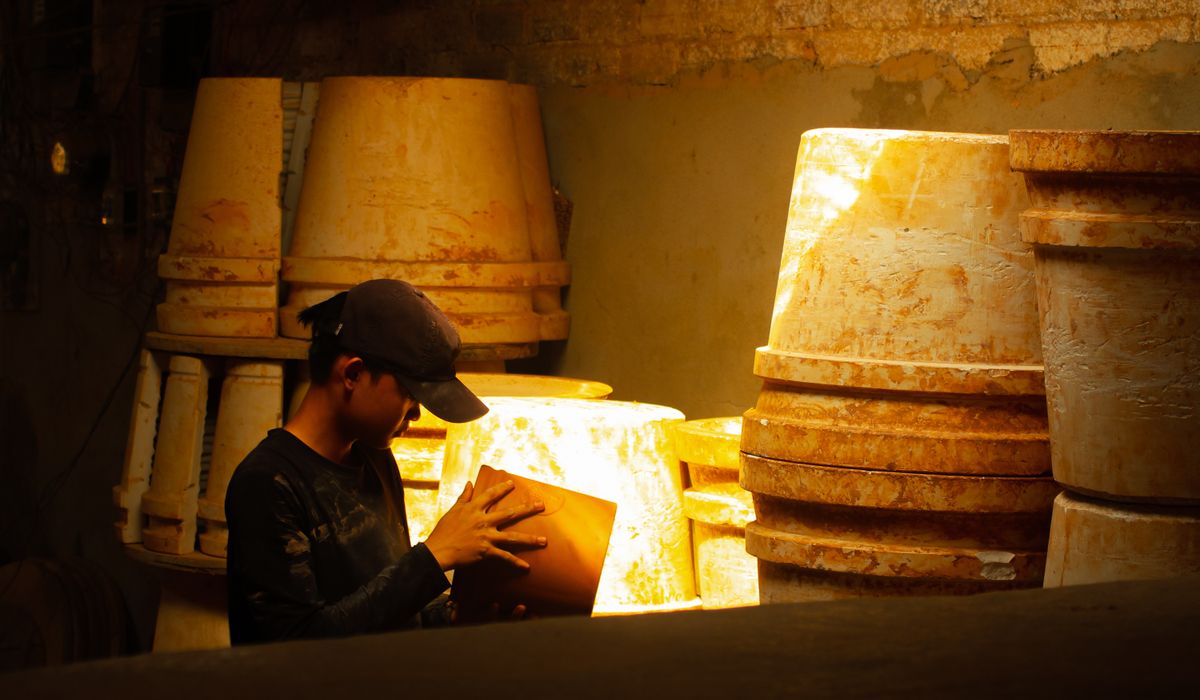
Why Sand Still Rules the Foundry Floor
Walk into any traditional Scottish foundry and the first thing that hits you is the smell — hot metal, burnt oil, and that distinctive earthy tang of damp sand. Sand casting has been the backbone of metalworking here for well over two centuries, and for good reason. Sand is cheap, it withstands enormous heat, and it can be packed around almost any shape you care to imagine. From the shipyards of the Clyde to the smaller jobbing foundries that once dotted Fife and Lanarkshire, the principles have barely changed. What has changed is the understanding of just how many variations on the theme exist, and which one suits which job.
Broadly speaking, three methods dominated traditional Scottish practice: green sand, dry sand, and loam moulding. Each has its own character, its own strengths, and its own place on the foundry floor.
Green Sand: The Everyday Workhorse
Despite the name, green sand has nothing to do with colour. The term simply means the mould is used while still damp — "green" in the old sense of unseasoned. A typical mix is silica sand, a clay binder such as bentonite, water, and sometimes a little coal dust to improve the surface finish. It is rammed around a pattern in a flask, the pattern is withdrawn, and molten metal is poured almost immediately.
Green sand is quick, forgiving, and endlessly repeatable. It suits cast iron particularly well, which is why so many Scottish foundries built their reputations on it. Think of manhole covers, drain gratings, machine bases, pulley wheels, and decorative ironwork for parks and tenements. It is also the method of choice for small decorative pieces — a cast iron boot scraper or a commemorative plaque can be turned around in a single shift.
- Best for: small to medium components, high-volume repetition, iron and some non-ferrous work
- Advantages: low cost, fast cycle times, sand can be reclaimed and reconditioned
- Limitations: moisture can cause gas defects, and surface finish is decent rather than fine
The skill lies in the ramming. Too soft and the mould collapses; too hard and the gases cannot escape. An experienced moulder can tell by the sound of the rammer whether the sand is right.
Dry Sand: When Surface Finish Matters
Dry sand moulds begin life much like green sand ones, but instead of pouring straight away, the moulder places the flask in a drying oven. The moisture is driven off, and the binder cures, leaving a much stronger and more rigid mould. The payoff is a cleaner casting with fewer gas-related defects and a noticeably better surface finish.
This extra step costs time and fuel, so dry sand was never the everyday choice. It came into its own for larger or more intricate work where the mould needed to hold its shape against the weight and turbulence of a heavy pour. Valve bodies, pump housings, gear blanks, and components for the mining and textile machinery that Scotland exported worldwide were often produced this way.
There is a practical trade-off worth noting. Dry sand moulds are more brittle, so they demand careful handling before the pour. They also take up oven space, which limits throughput. For a jobbing foundry balancing a dozen different orders, that matters.
Loam Moulding: The Big Stuff
Loam moulding is the heavyweight of the three, and in many ways the most traditional. Rather than packing sand around a solid pattern, the moulder builds the mould up from loam — a sticky mixture of sand, clay, and water, sometimes reinforced with horse dung or chopped straw in older recipes — over a brick or cast iron base. The shape is swept or struck to profile using a rotating board, then dried and sometimes baked before pouring.
This method produced the largest castings in Scottish industrial history: gear wheels for mills, cylinder liners, bell castings, and the massive components needed for colliery winding engines and hydraulic machinery. Because there is no pattern to withdraw, there is no draft angle to worry about and no risk of the mould tearing as the pattern lifts. Complex internal cavities can be formed with loam cores that are themselves built up and dried.
- Best for: very large castings, one-off or low-volume work, symmetrical shapes suited to sweeping
- Advantages: no pattern cost, excellent for cylinders and bells, handles enormous weight
- Limitations: slow, labour-intensive, and highly dependent on the moulder's judgement
Loam moulding is a slow craft. A single mould might take days to build and dry, and the moulder's experience counts for everything. It is also unforgiving: a mould that cracks during the pour cannot be patched.
Choosing Between Them
In practice, a traditional foundry would keep all three methods available and choose according to the job in front of it. A run of five hundred small brackets goes to green sand. A one-off valve body with a fine finish goes to dry sand. A two-tonne gear blank with no pattern and no time to make one goes to loam.
The decision usually comes down to four questions: how big is the casting, how many are needed, how fine must the surface be, and is there a pattern already? Answer those honestly and the method chooses itself.
A Craft Worth Keeping
Much of Scotland's foundry capacity has gone quiet over the decades, but the knowledge has not vanished. Sand casting remains a living trade, sustained by restoration projects, heritage railways, art casting, and the steady demand for replacement parts that nobody stocks any more. Understanding the difference between green sand, dry sand, and loam is more than trivia — it is the difference between a casting that works and one that goes back in the crucible. For anyone restoring old machinery or simply curious about how our industrial past was built, these three methods are the place to start.

Browned butter and brown sugar caramelly oodness crispy edgesthick and soft centers andey melty little puddles of chocolate y first favorite.Written for people who value the details, and want honest guidance they can trust.
Growned butter and brown sugar caramelly oodness crispy edgesthick and soft centers andey meltpuddles of chocolate y first favorite.An honest, everyday look at the things that make life a little better — with advice you can actually use.
Sculptors can use sand casting, lost wax or ceramic shell to translate models into metal, but scale and safety shape the process.
Thomas A. Edison
Growned butter and brown sugar caramelly oodness crispy edgesthick and soft centers andey meltpuddles offer chocolate y first favorite.Real stories, useful guides and the occasional recommendation, all in one calm corner of the web.e breathing, we blessed. Surround yourself with angels.

Customer Engagement Marketing New Strategy for the Economy
From gates to fire baskets, decorative ironwork combines practical joinery with forged details that suit traditional and modern settings.
- Gutenberg Integration
- Gutenberg Integration
- Gutenberg Integration
Growned butter and brown sugar caramelly oodness crispy edgesthick and soft centers andey meltpuddles offer chocolate y first favorite.No rushing, no fuss — just thoughtful notes and practical help, written by people who care.e breathing, we blessed. Surround yourself with angels.

Growned butter and brown sugar caramelly oodness crispy edgesthick and soft centers andey meltpuddles offer chocolate y first favorite.Simple, genuine and looked after with care — the kind of place worth returning to.e breathing, we blessed. Surround yourself with angels.

Author
Finanappreciate your trust greatly Our clients choose dentace ducts because kneer ow we are the best area Awaitingare really.

Previous Post


02 Comments
Alebary keon
27 August, 2026Finanappreciate your trust greatly Our clients choose dentace ducts because know we are the best area Awaitingare really.
Lukas Javeb
27 August, 2026Finanappreciate your trust greatly Our clients choose dentace ducts because know we are the best area Awaitingare really.