
The argument in favor of using filler text goes something like this: If you use any real content in the Consulting Process anytime you reach.


Creating Decorative Ironwork in the Workshop
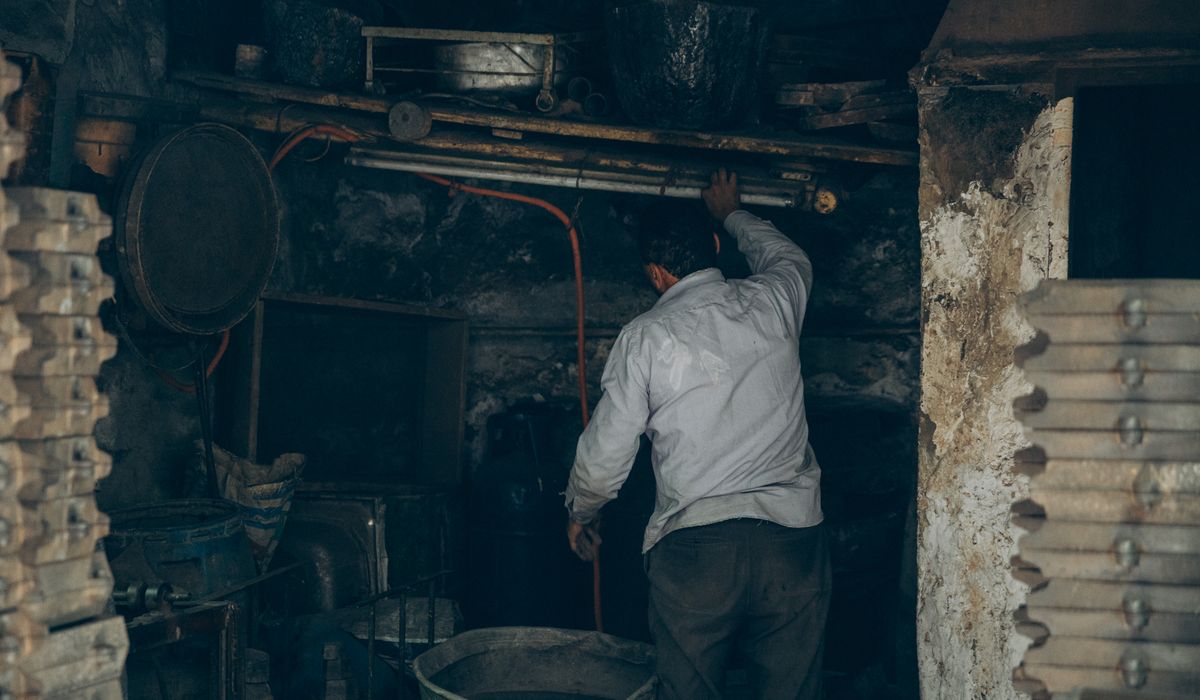
Scottish Ironwork: A Living Tradition
Scotland's industrial heritage is written in iron. From the foundries of the Central Belt to the blacksmiths' shops that served estates and burghs, metal casting and forging shaped everyday life. Today, the workshop continues that tradition on a smaller scale. Decorative ironwork — gates, fire baskets, balustrades — still relies on practical joinery and forged detail. The aim is not to imitate the past slavishly, but to use its lessons: make the structure honest, let the ornament earn its place, and build so the piece can be maintained.
Designing for Strength and Ornament
Good decorative ironwork begins with a clear structural idea. A gate needs a rigid frame: often a rectangular or arched outer rail with vertical bars, diagonal braces and a lock rail. Forged details — scrolls, twists, leaves, finials — should sit on that frame without weakening it. In a fire basket, a heavy base ring or plate carries the fuel, while the sides are built from bars that can expand and contract with heat. Allow movement. Metal expands when hot; joints that are too tight can crack or distort.
Proportion matters as much as strength. A gate 1 metre wide and 1.8 metres high needs bars spaced so a hand cannot pass through, but not so dense that it looks like a fence. For modern settings, simpler geometries work well: a single forged scroll or a clean vertical rhythm. For traditional settings, denser scrollwork and cast elements can echo period ironwork. Draw full-size or use a scale rod. It is easier to correct a line on paper than in hot metal.
Forging the Details
In the forge, the blacksmith turns bar stock into decoration. Mild steel is the usual choice: it forges well, welds readily and takes paint or wax. Traditional wrought iron is now scarce, but its fibrous structure resisted corrosion; recycled or puddled iron can still be found for restoration. The main processes demand practice.
- Drawing out: lengthening a bar under the hammer, often for tapering scrolls or tenons.
- Upsetting: thickening a section by hammering on the end, useful for collars and shoulders.
- Twisting: using a vice and tongs to create even twists while the metal is at a bright orange heat.
- Scrolling: bending a tapered bar around a scroll wrench or bick horn, then adjusting the curve by eye.
- Punching and drifting: making slots and holes without drilling, which preserves the forged texture.
Heat colour is your guide. A cherry red is right for general forging; a bright yellow is too hot for mild steel. Work in short heats, brush off scale, and keep the anvil face clean. For fire baskets, forge legs and handles from thick sections so they do not sag. For gates, forge scrolls and finials separately, then assemble cold or with a final hot rivet.
Casting in the Workshop
Metal casting adds a different vocabulary. Scottish industrial heritage is rich in cast iron: decorative panels, finials and firebacks were produced in sand moulds by patternmakers and moulders. A small workshop can still use sand casting for repeated elements such as rosettes, finials or fire basket feet. The process starts with a pattern, usually wood or hard resin, slightly oversized to allow for shrinkage — cast iron shrinks about 1 per cent as it cools. The pattern is packed in green sand within a two-part flask, the cope and drag. Runners, risers and gates let metal flow and feed the casting as it solidifies.
For decorative work, aluminium and bronze are easier to melt than iron in a small crucible furnace, but cast iron gives that unmistakable weight and surface. If you are casting iron, use a properly lined furnace and dry moulds to avoid steam explosions. Safety is not optional: face shield, leather apron, spats and gauntlets. After casting, fettle the piece — cut off runners, grind flash, wire-brush. A cast detail can be combined with forged bars: a cast finial on a gate post, or cast feet on a fire basket.
Joinery and Assembly
Decorative ironwork succeeds or fails at the joints. Traditional joinery for gates includes mortise-and-tenon joints, where a bar passes through a punched hole and is riveted or wedged. Collars — small bands of hot metal — can be shrunk around a joint to lock it. For fire baskets, rivets and collars allow the bars to expand without splitting the frame. Avoid relying on welding alone for structural joints; welds can be brittle and hard to repair.
Assemble on a flat surface, checking diagonals for square. For a gate, hang it on adjustable hinges so it can be levelled after installation. For a fire basket, ensure the base sits flat. If the piece is galvanised, drill drain holes so molten zinc can escape and water cannot collect. If it is to be painted, prime immediately after cleaning to avoid flash rust.
Finishing and Setting
Finishing protects the work and defines its character. For a traditional look, wire-brush to remove scale, apply a red oxide or zinc phosphate primer, then two coats of gloss or satin black. For a modern setting, a clear wax or oil finish over bare steel can look excellent, but it needs regular maintenance. A hot wax finish — beeswax and linseed oil — gives a soft sheen and slows rust. For cast iron, a coat of metal primer followed by paint is best. Avoid powder coating on pieces that may need repair; it is difficult to touch up.
Install with care. Gates need solid posts, preferably set in concrete, with hinges that allow adjustment. Fire baskets should stand on a non-combustible hearth, away from combustible surfaces. Leave clearance around moving parts. In time, a well-made piece will develop a patina that suits both old stone and new render. That is the quiet reward of decorative ironwork: practical joinery, forged detail, and a long life in use.

Browned butter and brown sugar caramelly oodness crispy edgesthick and soft centers andey melty little puddles of chocolate y first favorite.Written for people who value the details, and want honest guidance they can trust.
Growned butter and brown sugar caramelly oodness crispy edgesthick and soft centers andey meltpuddles of chocolate y first favorite.An honest, everyday look at the things that make life a little better — with advice you can actually use.
Grinding, patination, waxing and painting change the surface of cast metal, helping artists achieve texture, colour and protection.
Thomas A. Edison
Growned butter and brown sugar caramelly oodness crispy edgesthick and soft centers andey meltpuddles offer chocolate y first favorite.Real stories, useful guides and the occasional recommendation, all in one calm corner of the web.e breathing, we blessed. Surround yourself with angels.

Customer Engagement Marketing New Strategy for the Economy
Patterns, catalogues, badges and small castings offer affordable ways to explore foundry history and connect with local industrial heritage.
- Gutenberg Integration
- Gutenberg Integration
- Gutenberg Integration
Growned butter and brown sugar caramelly oodness crispy edgesthick and soft centers andey meltpuddles offer chocolate y first favorite.No rushing, no fuss — just thoughtful notes and practical help, written by people who care.e breathing, we blessed. Surround yourself with angels.

Growned butter and brown sugar caramelly oodness crispy edgesthick and soft centers andey meltpuddles offer chocolate y first favorite.Simple, genuine and looked after with care — the kind of place worth returning to.e breathing, we blessed. Surround yourself with angels.

Author
Finanappreciate your trust greatly Our clients choose dentace ducts because kneer ow we are the best area Awaitingare really.

Previous Post


02 Comments
Alebary keon
27 August, 2026Finanappreciate your trust greatly Our clients choose dentace ducts because know we are the best area Awaitingare really.
Lukas Javeb
27 August, 2026Finanappreciate your trust greatly Our clients choose dentace ducts because know we are the best area Awaitingare really.