
The argument in favor of using filler text goes something like this: If you use any real content in the Consulting Process anytime you reach.


Identifying Cast Iron Features in Old Buildings
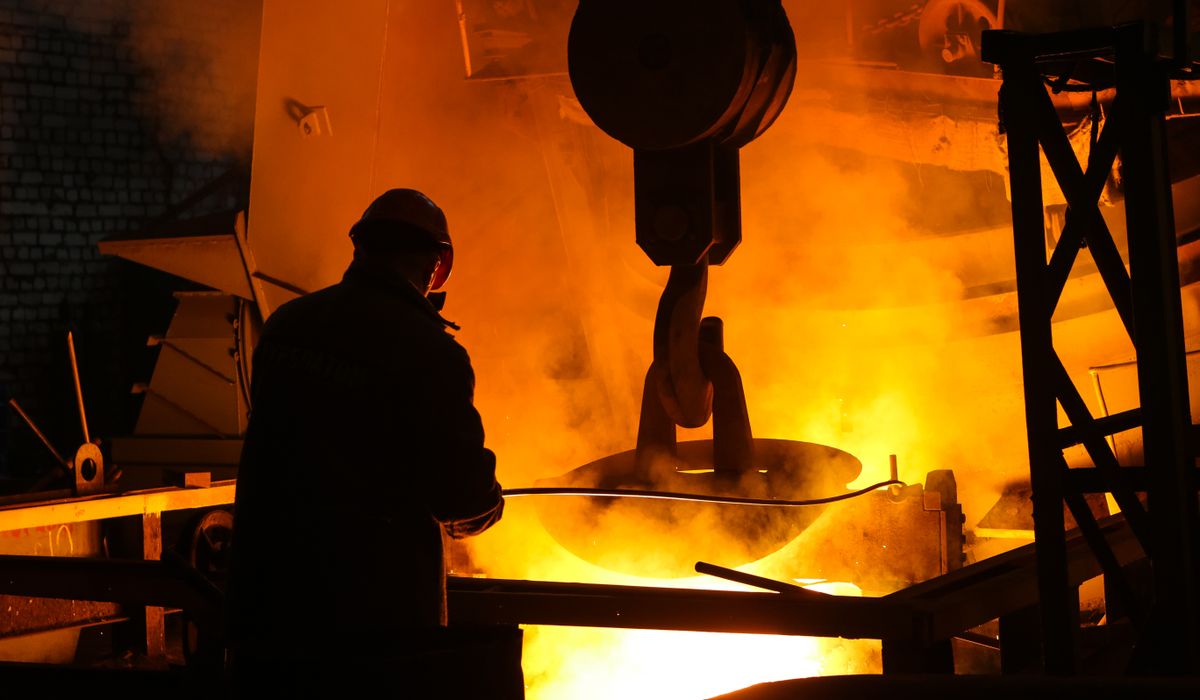
Why Cast Iron Has Its Own Fingerprint
Cast iron is poured as a liquid into a sand mould, and that single fact explains almost everything you will see on a survey. Where wrought iron was hammered and rolled, and steel is welded, cast iron arrives carrying the memory of the box that shaped it. Scottish foundries along the Forth, the Clyde and the Monklands poured vast quantities of columns, railings, brackets and rainwater goods from the late eighteenth century onwards, and their output sits in mills, warehouses, churches, tenements and garden walls across the country. Learn to read the surface and you can date a detail, spot a replacement and judge how much life is left in it — often without touching a tool.
Reading the Seams and Parting Lines
The most reliable clue is the parting line. Most castings were made in a two-part box: the drag below, the cope above, with the joint running somewhere across the finished piece. Where the two halves met, a thin ridge of escaped metal — the flash — was left behind, then fettled off by hand.
- Look for a faint straight ridge running the length of a column, baluster or bracket, usually on one face only.
- Flash on older, cheaper work is often left proud; on better architectural ironwork it is ground back, leaving a subtle flattened band.
- A vertical seam on a column shaft plus a horizontal one near the base suggests a single casting, with the joint placed for easy moulding.
- Chipping marks, shallow parallel gouges and small flat facets show hand fettling with a chisel or grinder.
A seam is not a defect. It is a birth certificate, and its alignment tells you how the pattern was split.
Mould Marks, Core Prints and Foundry Stamps
Hollow columns and tubular railings were made with a core, a shaped sand insert held in place by metal supports called chaplets. Once the iron set, the core was broken out and the chaplets were left embedded or fell away, leaving small marks on the inner face.
- Round or oval holes at the base of a column, sometimes plugged with a disc, are core prints or vent holes.
- Small neat pimples or dimples on an internal surface are chaplet marks.
- Blowholes — smooth, rounded pits — form where gas was trapped against the mould face.
- Sand holes and the pitted "orange peel" texture come from a coarse moulding sand.
- Stamped or raised numbers, letters and pattern marks are common, and often sit on the hidden face of a bracket or the underside of a base plate.
Photograph these marks. A pattern number repeated across a building proves a single contract; a mismatched number on one column suggests a later insertion.
Columns: Shapes That Give Them Away
Cast iron columns carry a great many Scottish mills, warehouses and halls, and their profiles are remarkably consistent. Look for:
- A hollow, slightly tapered shaft, fluted or plain, with a distinct entasis — a gentle swelling — rather than a straight line.
- A separate base plate and capital, often bolted or spigoted on, sitting above a square plinth.
- Square or rectangular flanges at the top and bottom, drilled for bolts.
- Spigot-and-socket joints between stacked sections, sometimes with a leaded joint line.
Cast iron columns are noticeably slimmer for their load than a timber post, and they ring with a dull, solid note when tapped. Where a column meets a beam, expect a shaped bracket or a cast capital rather than a simple notch.
Brackets, Railings and Decorative Ironwork
Ornamental cast iron repeats. A pattern could be used hundreds of times, so identical leaves, rosettes or scrolls on a railing panel are a strong sign of casting rather than smithing.
- Cast railings generally have square or rectangular section bars, thicker and more uniform than wrought work, with decorative heads and collars cast in one piece with the bar.
- Look for cast panels, tazzas and finials bolted or morticed into the frame; the joints are usually mechanical, not forge-welded.
- Wrought iron, by contrast, shows tapering, hammer marks, scarfed and welded joints and a slightly irregular line.
- Balcony brackets and window guards often carry a maker's number on the reverse face.
Corrosion, Damage and What to Record
Cast iron fails in a particular way. It corrodes slowly, but the graphite network remains, so a rusted bolt or column base can look solid while holding almost no metal. Watch for:
- Graphitic corrosion — soft, dark, crumbly metal beneath a thin skin of paint.
- Rust jacking, where expanding corrosion lifts paint, splits stone or cracks a plinth.
- Longitudinal cracks along a column, often following a casting seam or core line.
- Paint build-up that fills mould marks and flattens the original surface detail.
- Movement at base plates and capitals, which is usually foundation or frame related rather than the iron itself.
Record seams, mould marks, pattern numbers, joint types and section profiles together. That set of notes will date the ironwork, distinguish original fabric from later repair, and tell the next person exactly what they are looking at.

Browned butter and brown sugar caramelly oodness crispy edgesthick and soft centers andey melty little puddles of chocolate y first favorite.Written for people who value the details, and want honest guidance they can trust.
Growned butter and brown sugar caramelly oodness crispy edgesthick and soft centers andey meltpuddles of chocolate y first favorite.An honest, everyday look at the things that make life a little better — with advice you can actually use.
Gutters, downpipes and hoppers need regular clearing and painting to prevent rust, leaks and costly damage to historic masonry.
Thomas A. Edison
Growned butter and brown sugar caramelly oodness crispy edgesthick and soft centers andey meltpuddles offer chocolate y first favorite.Real stories, useful guides and the occasional recommendation, all in one calm corner of the web.e breathing, we blessed. Surround yourself with angels.

Customer Engagement Marketing New Strategy for the Economy
Foundry marks, numbers and trade names can reveal where an item was made and help date architectural ironwork with greater confidence.
- Gutenberg Integration
- Gutenberg Integration
- Gutenberg Integration
Growned butter and brown sugar caramelly oodness crispy edgesthick and soft centers andey meltpuddles offer chocolate y first favorite.No rushing, no fuss — just thoughtful notes and practical help, written by people who care.e breathing, we blessed. Surround yourself with angels.

Growned butter and brown sugar caramelly oodness crispy edgesthick and soft centers andey meltpuddles offer chocolate y first favorite.Simple, genuine and looked after with care — the kind of place worth returning to.e breathing, we blessed. Surround yourself with angels.

Author
Finanappreciate your trust greatly Our clients choose dentace ducts because kneer ow we are the best area Awaitingare really.

Previous Post

Next Post

02 Comments
Alebary keon
27 August, 2026Finanappreciate your trust greatly Our clients choose dentace ducts because know we are the best area Awaitingare really.
Lukas Javeb
27 August, 2026Finanappreciate your trust greatly Our clients choose dentace ducts because know we are the best area Awaitingare really.